
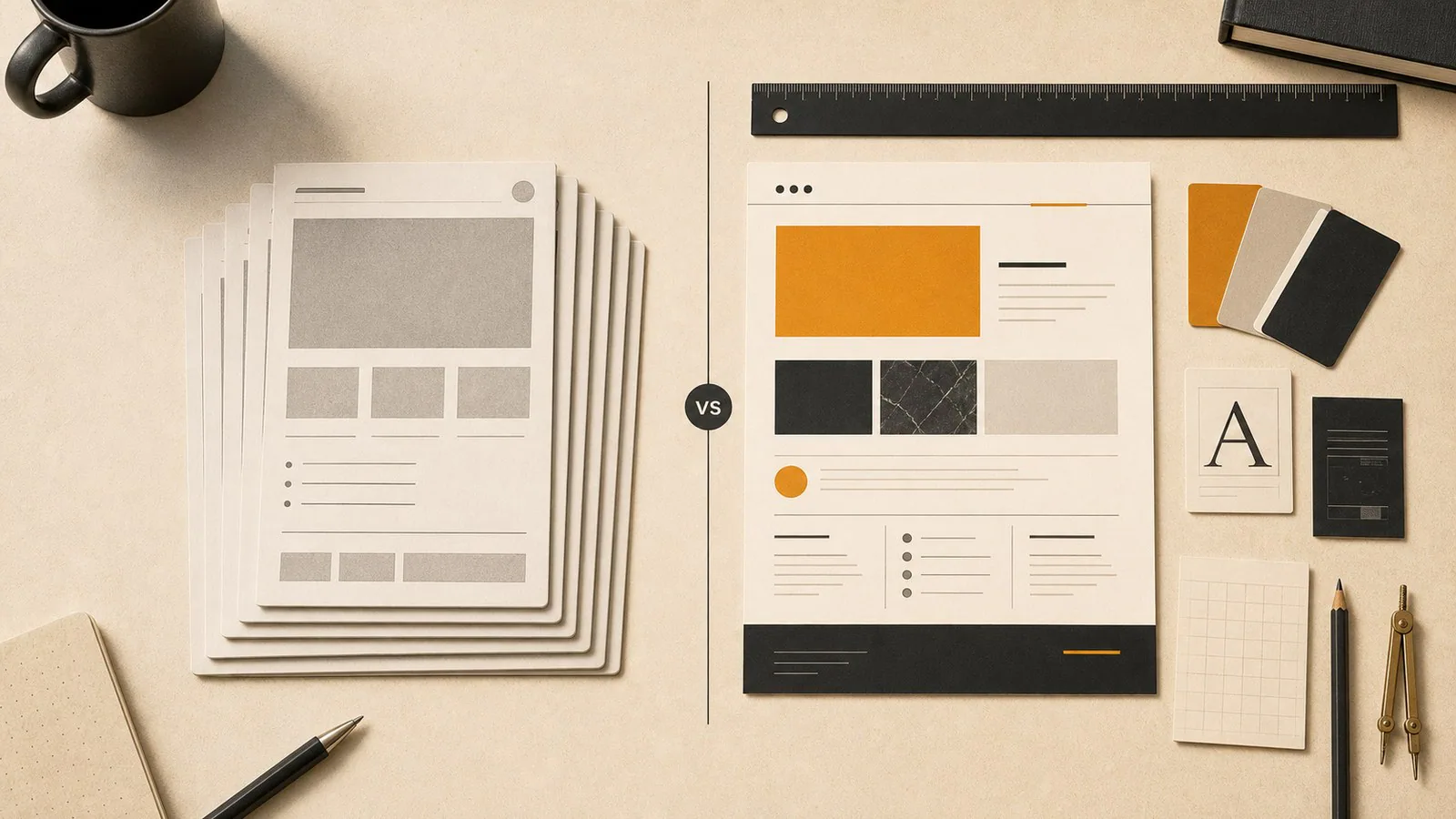
A template reuses an existing design and can reduce setup time, while a custom site can give more control over layout and content structure. Neither approach guarantees lower long-term cost, stronger search results or full ownership. Compare the written quote, renewals, editing support, export limits and rights to the domain, content, design and code before choosing.
Two providers can quote for “a five-page business website” while including different design, platform, content and support work. Review what is included in a five-page website alongside the platform, rights, renewals and handover terms before comparing the prices.
Updated 5 November 2026: added platform export limits, qualified cost and search claims, and shortened repeated decision advice.
What a template website actually is
A template website starts from a pre-existing design that can be reused and adapted. The owner supplies content and branding; the setup time depends on the platform, the amount of customization and the content that is ready.
Templates come in two common forms:
- Hosted platform templates (such as Wix, Squarespace or Shopify): the provider hosts the site and bills according to its current plan. Your account, domain, content and design rights depend on how they are registered and on the platform terms.
- Theme-based templates (such as WordPress themes): the design is reusable and may run on separately selected hosting. Moving a site can still require work on files, databases, URLs, licences or platform-specific features.
The defining feature of a template is that its starting structure is reused. The finished site can still be adapted, but the available changes depend on the theme, platform and agreed scope.
What a custom website actually is
A custom website is designed or developed around the business’s offer, audience and content. “Custom” can mean a bespoke design using a content management system (CMS), software for editing and publishing site content, or a more bespoke build; ask what the provider means in the quote.
Custom work spans a range:
- Custom design on a content management system: the visual layer is designed for the brief while the provider uses an existing CMS.
- Bespoke development: the provider develops functionality or page structures for the brief. The work may still use an existing framework or libraries, so ask what is custom and what is reused.
The brief and quote should explain which design or structural changes are being made for the business. The outcome depends on the agreed scope and implementation.
What a template does well
Templates can suit projects with a clear scope and a design that fits the available options.
Template strengths
- Starting point: the available layout may reduce initial design work. Timing and price depend on customization, content, configuration and approvals.
- Editing tools: hosted platforms often include visual editing tools; check whether the proposed plan and template support the changes the owner expects to make.
- Bundled services: some providers bundle hosting, SSL (the certificate that enables an encrypted HTTPS connection) or a domain; check the provider’s quote and terms to see what is included and when renewals begin.
For a business that needs a presence quickly and can work within the available design and platform features, a template can be a reasonable starting point. Check how much setup and content work remain before comparing launch dates or prices.
What a template gives up
The trade-offs become visible over time.
Template trade-offs
- Less distinctive starting point: a template may be used by other businesses, and the amount of visual change depends on its options and the scope.
- Portability limits: some hosted platforms export only selected content or formats. Squarespace, for example, documents limits on what can be exported, and platform-specific features may need replacement. Check the current export documentation before you commit.
- Recurring fees: hosted plans, domains, apps and support may renew. Check the plan and renewal price before signing up.
- Performance varies: a template can include features a site does not use, but speed depends on the platform, theme, assets and implementation. Measure the finished site instead of assuming one approach is faster.
- Maintenance responsibility: theme-based sites may need updates to the theme, plugins and CMS. Ask who applies and checks updates, especially if the theme or a plugin is no longer maintained.
These trade-offs matter most when the site grows, the plan changes or the business wants to move. Check which content and assets can be exported and what would need rebuilding.
What a custom website does well
Custom work can justify a higher setup price when the brief needs a specific design, content structure or integration. The quote and contract determine what is included and what the business can use after handover.
Custom strengths
- Visual fit: a bespoke design can reflect a business’s brand and offer when the brief, design and implementation support that result.
- More design control: the visual system and page structure can be planned around the offer.
- Choice of platform: the provider can build on a CMS or another stack suited to the agreed work.
- Page structure: headings, descriptive links and crawlable pages can help people and search crawlers (automated programs that discover pages) navigate the site. Templates can support the same basics; a custom build does not guarantee rankings. Google treats Core Web Vitals as real-world experience metrics to consider alongside other page experience factors. See its Core Web Vitals guidance.
- Rights can be specified: the contract can list the domain, content, design files, code, licences and accounts included at handover.
- Room to grow: a planned structure can support future changes, although the cost and effort depend on the platform and scope.
For more on visual credibility, see what makes a business website look trustworthy. A template can still be adapted within its available design options and the agreed scope.
What a custom website gives up
Custom work is not universally better; it has real trade-offs.
Custom trade-offs
- Setup cost can be higher: a custom quote may include more discovery, design or development work than a simple template setup. The actual cost depends on the brief, provider, platform and quoted scope; compare the line items rather than assuming one route costs more.
- Potentially longer timeline: discovery, design and development can add time. Ask each provider for milestones and list the content or approvals the business must supply.
- Less self-service editing: depending on the platform, content updates may require a developer.
- Support needs: some changes may require a developer or support plan. Confirm who handles updates, backups, security and troubleshooting.
For a business that changes content rarely and values a specific design or structure, these trade-offs may be acceptable. For a business that needs frequent self-service edits, confirm that the proposed build supports them or budget for assistance.
Compare the cost over three years
There is no reliable rule that a template or custom site will always cost less over time. Compare the same period and list costs the quote does not include:
| Cost line | Template or hosted platform | Custom or commissioned build |
|---|---|---|
| Setup | Design, configuration, content entry and any paid theme | Discovery, design, development, content entry and integrations |
| Recurring | Plan, domain, apps, email, support and transaction fees where applicable | Hosting, domain, licences, maintenance, support and update work |
| Changes | Included editing tools and paid help for work outside them | Who can edit, what changes need a developer and the hourly or retainer rate |
| Exit or migration | Export limits, replacement tools and rebuilding platform-specific features | Exported files/database, code or design rights, licences and migration assistance |
Three-year estimate = setup + 36 months of recurring charges + expected changes + migration or exit costs. Use each provider’s written quote and current renewal prices. If a line is unknown, ask the provider to state whether it is included, optional or billed separately. Do not compare a launch price with a three-year total.
Before signing, confirm who controls the domain registrar, hosting and platform accounts; what rights transfer in the text, images, design files and code; which third-party licences remain active; what can be exported; and whether handover or migration is included. These details depend on the contract and platform, not on the label “custom” or “template.” Squarespace lists its export limits in its site export guide. WordPress migration can involve moving files and databases and updating URLs, as described in the WordPress migration handbook.
How to choose based on the business’s real needs
Compare each proposal against the requirements that matter to the business:
A template may fit if
- The business has a near-term launch date and the provider can confirm a realistic schedule for the required content and setup.
- The quoted setup and recurring fees fit the budget.
- The available design and platform features cover the required pages and functions.
- The owner can make expected edits, or support costs are included in the budget.
A custom build may fit if
- The brief needs a design, structure or integration the proposed template cannot support.
- The quote names the custom work and its cost, and the contract states account access, asset rights, renewals and handover terms.
- The business has a budget and process for content edits, updates and support.
Neither option is the default winner. Use the same requirements and time period for both proposals, then check whether the differences matter to the business’s expected use.
The platform question inside the template question
Templates and custom builds can use different platforms, which affects editing, hosting, migration and support. Is WordPress right for your small business website? explains that platform choice in more depth. Ask each provider who handles updates and what maintenance is included.
How this connects to the IDJoy pricing
The IDJoy pricing page lists current package scope and starting prices. Ask for a written quote that names the proposed platform, what is included in the handover, who controls each account, which services renew, and what future edits or support cost. Confirm ownership and usage rights in that quote rather than inferring them from a package name.
The conclusion
A template starts from a reusable design; custom work responds to a specific brief. Compare the written three-year costs, required features, editing arrangements and exit terms before choosing.
If you want help deciding which approach fits your business, explore the pricing page or describe your situation and we will tell you which approach serves you best.