
A deposit can reduce your risk when work requires upfront time, materials, bookings or custom delivery. Agree the amount, what it secures, when it is due, how it applies to the final price and what happens if the project changes before work starts.
Starting work without payment can turn a profitable project into unpaid labour. A deposit does not solve every risk, but it gives the client a reason to commit before you block out time, buy materials or begin custom work.
When a deposit makes sense
Consider a deposit when the project involves work you cannot reuse for another client, upfront supplier costs or a booking that prevents you taking another job. With a first-time client, a deposit may also help when you cannot yet assess their payment reliability.
An upfront payment may put some clients off when the task is small and reusable, the client has worked with you before, or you need little spending up front. For those jobs, decide whether your costs or reserved time justify asking for payment before delivery.
The amount should match the risk. A photographer reserving a date, a designer beginning a custom identity and a builder ordering materials face different costs. Do not copy another business’s percentage without checking what you need to cover.
Explain what the payment does
Use plain language. State whether the deposit secures a slot, covers initial planning, pays for materials or forms part of the final project price.
Example only:
Project price: R12,000
Deposit due on acceptance: R4,000
Balance due: R8,000 before final handover
The deposit is credited against the total project price.
Base the amount on your actual upfront costs, the time you reserve and any later milestone payments.
Your quote or agreement should also explain how cancellations, postponements and significant changes to the agreed work are handled. For a consumer’s advance booking, section 17 of South Africa’s Consumer Protection Act allows a supplier to require a reasonable deposit and charge a reasonable cancellation fee. It also bars that fee when death or hospitalisation prevents the consumer from honouring the booking. Because section 17 has exceptions, check whether it applies to your transaction before setting cancellation terms. Do not assume every deposit is automatically non-refundable.
Do not let the invoice introduce a surprise
The client should not receive an unexpected request for 50% after believing payment was due only at completion.
Use a quote to propose the work. Use the accepted agreement to record the commitment. Use an invoice to request the agreed payment. Clear document roles reduce arguments later.
Match the remaining payments to visible work
For a longer project, link later payments to milestones both sides can recognise. “Approved concept”, “materials delivered” or “pre-launch review” is clearer than “phase two”.
If the scope changes, price the change before doing the extra work. A deposit for the original project does not automatically fund every new request.
Put the deposit terms in writing
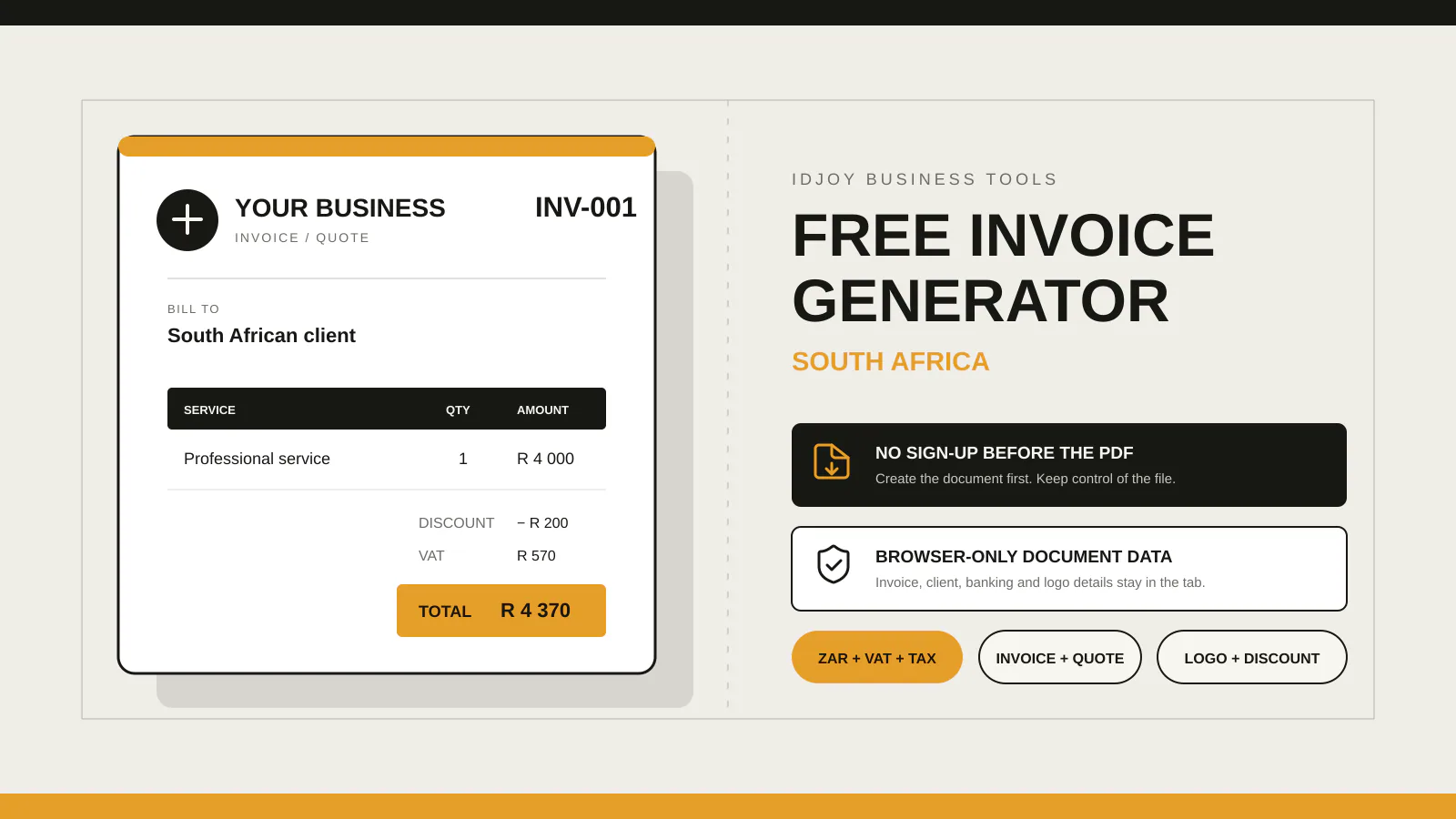
IDJoy’s free generator lets you create an invoice or quote PDF without an account. Use a quote to propose the work and deposit terms. Once the client accepts, use an invoice to request the agreed deposit. Enter the amount as a line item, state in the notes or terms how it will count toward the final project price, and add the invoice due date and payment details. Selecting “Download PDF” opens your browser’s print dialog, where you can choose “Save as PDF.”