
In your first 30 days, set up a way to separate business transactions, list fixed and variable costs, track each invoice and due date, agree payment terms before work starts, plan for tax obligations that apply to your business and review expected cash in and out for the next four weeks. Cash flow is the timing of money received and paid; an issued invoice is not cash in the bank.
Cash flow is the timing of money entering and leaving a business. A new service business can show a sale before it has the cash: a client may approve a quote today, pay next month and expect work to start this week.
This 30-day checklist is for new South African service businesses. Use it to see what is due, when money may arrive and which costs need cash first. Treat the weeks as a suggested order and adjust them to fit your business.
Week 1: Separate the money
- Use a dedicated business account where practical. If you track transactions in a spreadsheet or bookkeeping tool, keep business entries separate from personal spending and save invoices, receipts and payment records together.
- Note the cash currently available for business use. Check upcoming costs and obligations before treating a client payment as personal spending money.
- Keep records that support tax reporting. SARS explains that obligations vary with factors such as a business’s type, size and nature, so check current guidance for your situation.
Finish with: a separate transaction record, supporting documents and the cash currently available for business use.
Week 2: List what leaves the account
- List recurring costs such as data, software, rent, insurance and subscriptions.
- Add costs that change with each job, such as travel, materials, subcontractors and delivery fees.
- Check which tax registrations, returns and payments apply to your business. What applies can depend on your business type, size and activity. Employing staff can also affect your obligations.
- Do not use a blog post to decide what tax you owe. Use the current SARS guide for small businesses or ask a qualified tax practitioner if you are unsure. Record verified tax due dates and amounts in your cash plan.
Finish with: a cost list that includes amounts, payment dates and any tax amounts you have verified.
Week 3: Track what clients owe and when
- Start an invoice tracker as soon as you agree payment terms or issue an invoice. Record each amount, issue date, agreed due date, client contact and follow-up date. Use Week 3 to catch up or review the tracker.
- If an invoice is overdue, confirm the client received it and ask when payment is expected; see this overdue-invoice follow-up guide.
- If a project needs substantial upfront work or purchases, consider whether a deposit or milestone payment fits. Agree the amount, due dates and what each payment covers before work starts. For other projects, a clear invoice and follow-up plan may be enough.
Finish with: an invoice tracker showing what clients owe, when each amount is due and when you will follow up.
Week 4: Look ahead four weeks
- For Week 1, start with cash actually available for business use. Keep unpaid invoices out of opening cash.
- For each week, use: opening cash + receipts expected by date − payments due by date = projected closing cash. Each later week starts with the previous week’s projected closing cash.
- Estimate receipt dates from agreed payment terms. Keep unconfirmed work in a separate note instead of the base forecast. Include owner withdrawals and verified tax payments among expected cash outflows.
- Update the view each week. Replace estimates with actual receipts and payments, then roll the next four weeks forward.
- If a projected balance will not cover a payment, identify the first week at risk. Check dates and amounts, follow up with the client, contact the supplier early and review spending you can defer. Get qualified advice before borrowing or changing a tax or payroll payment.
- A four-week view can help you spot a shortfall early, but it cannot guarantee that clients will pay on time.
Finish with: a four-week cash view that shows the projected closing balance for each week.
An unpaid invoice is not cash
Do not confuse revenue with cash available. For example, an unpaid R10,000 invoice cannot cover rent, suppliers or tax due today. The amount and timing of cash matter alongside the sale.
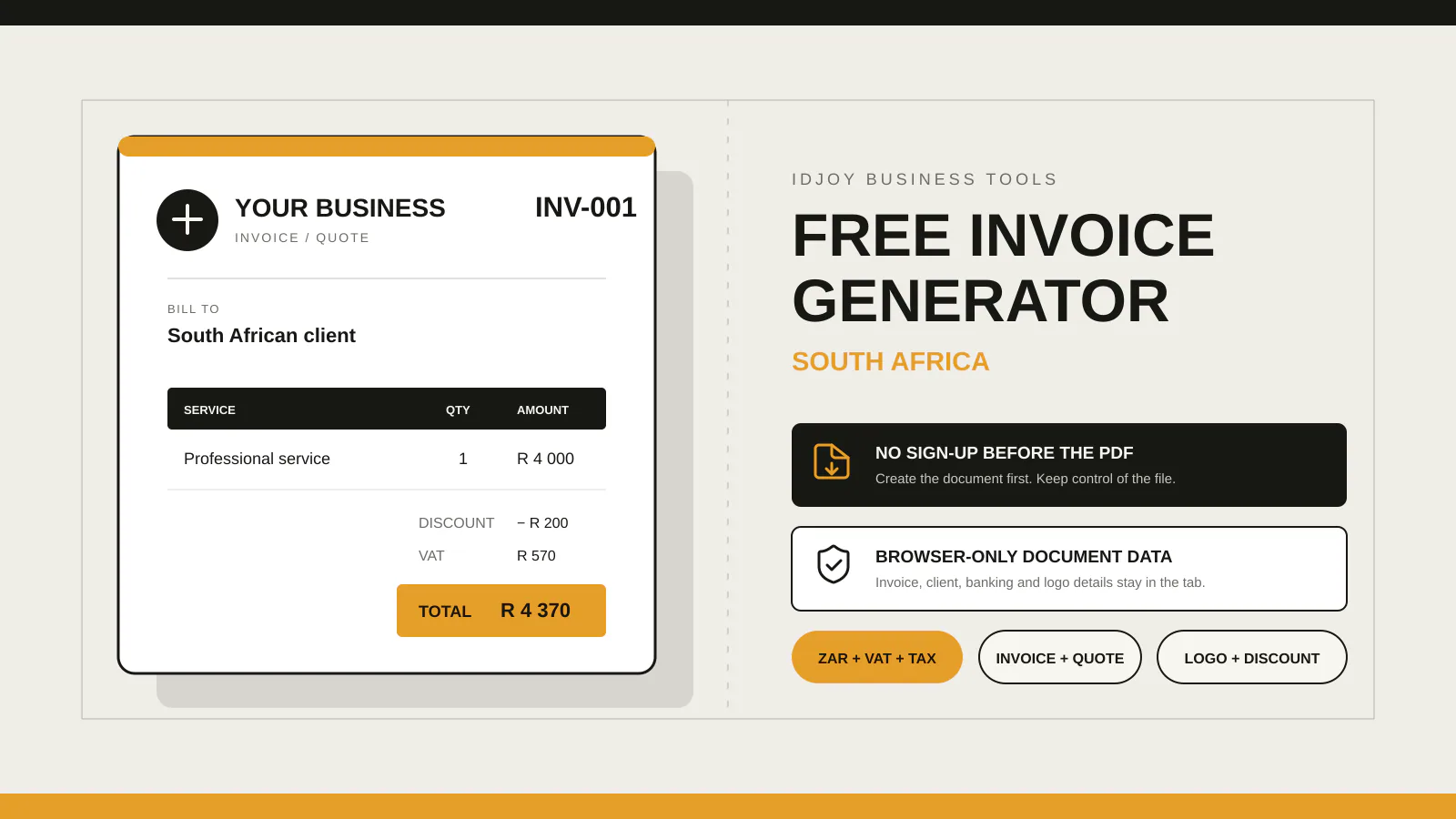
IDJoy’s guest invoice generator creates an invoice or quote PDF without an account. The guest flow does not keep an invoice history or follow up with clients, so record payment dates and reminders in your own bookkeeping system.